
-800w.jpeg)
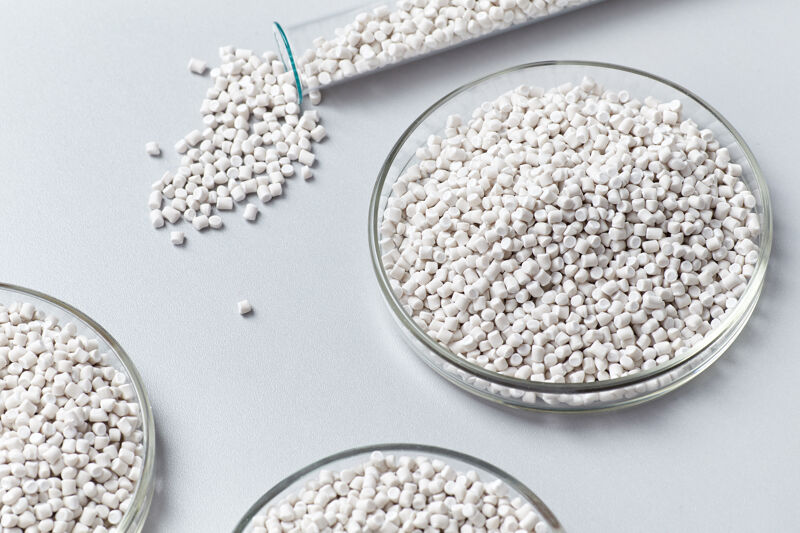
High Performance Compounded Plastic Resins To Meet Your Needs
We have More than 40 years of proven success in developing and commercializing innovative advanced plastic materials, high-performance composites, and novel nano-composites to meet the most demanding material requirements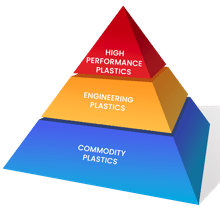
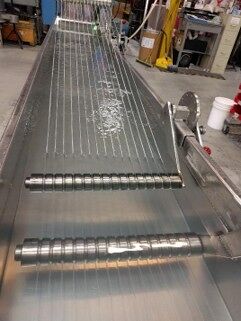
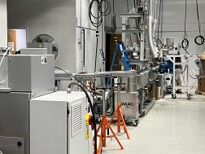
Compounded Plastic Resins
We have the compounding capacity and capability to supply
your needs for plastic resins, including
- Polyolefins, HDPE, PP, etc.
- Nylon 6, nylon 66, nylon 12, high temperature nylons, transparent nylons, etc.
- PET, PBT, and their blends
- ABS and its blends
- Polycarbonate and blends
- High temperature engineering plastics: PPE, PEI, polysulfone, PES, PPS, PEEK, etc.
The compounded resins can be further modified to have one or
more of the following features
- Super-tough impact resistance or extremely low temperature impact resistance
- Super-high heat aging resistance
- Low frictional requirements and/or abrasion resistance
- Super-high strength and stiffness with glass fiber up to 65% and still retaining excellent mold flow capability
- Improved barrier properties, such as moisture, oxygen, etc
- Various glass and mineral fillers
- Improved MDO film stretching characteristics
- Improved creep resistance and/or fatigue resistance
- Optimized resin characteristics for improving plastic sheet co-extrusion
- Improved mold flow for thin wall applications
- Halogenated or halogen-free flame retarded resins
- Improved molding cycle time
- Improved mold release and surface finishes
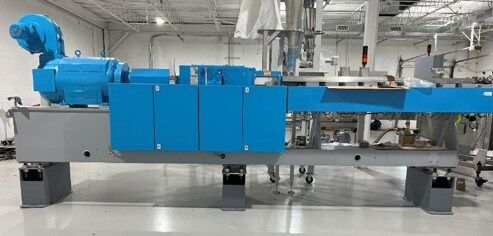
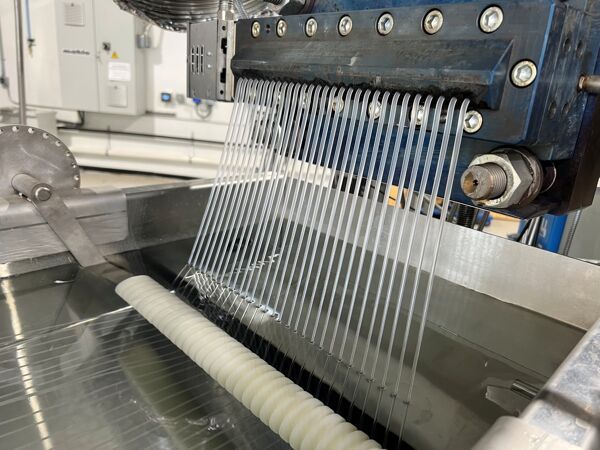
Performance Improvements Through Resin Modifications
In general, unmodified plastic resins directly from the reactor
have limited real-world applications beyond basic commodity
films and sheet extrusion. However, their performance can be
significantly enhanced through compounding - by blending the
neat plastic resin with other resins, additives, and
reinforcements.
For example, most engineering plastics such as nylon, PET, and PBT resins lack sufficient heat-aging resistance for demanding under-the-hood automotive applications. While heat stabilizers or antioxidants can offer some improvement, substantial gains are achieved by blending these resins with other polymers using carefully selected resin systems and advanced compounding techniques.
We bring over 40 years of proven success in developing and commercializing thermoplastic resins - from commodity polyolefins to engineering and high performance plastics - for automotive, consumer and defense market applications. To support both production and innovation, we operate a full-scale 60 mm compounding line, as well as a 27 mm laboratory line dedicated to new resin development.
For example, most engineering plastics such as nylon, PET, and PBT resins lack sufficient heat-aging resistance for demanding under-the-hood automotive applications. While heat stabilizers or antioxidants can offer some improvement, substantial gains are achieved by blending these resins with other polymers using carefully selected resin systems and advanced compounding techniques.
We bring over 40 years of proven success in developing and commercializing thermoplastic resins - from commodity polyolefins to engineering and high performance plastics - for automotive, consumer and defense market applications. To support both production and innovation, we operate a full-scale 60 mm compounding line, as well as a 27 mm laboratory line dedicated to new resin development.
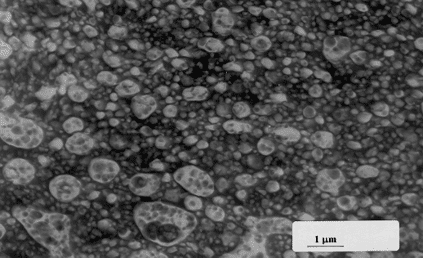
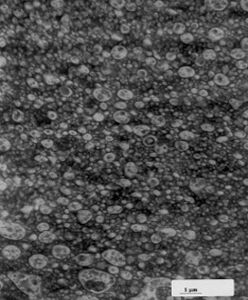
TEM Picture Of The Reactive Blend Of Two Immiscible Polymers
with the dispersion particle size below 1.0 um
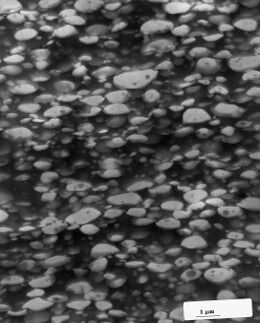
TEM Picture of the well-dispersed compatible blend of two
immiscible polymers with a particle size of about 1.0 um
Optimum Dispersion Of Advanced Nano-Composites
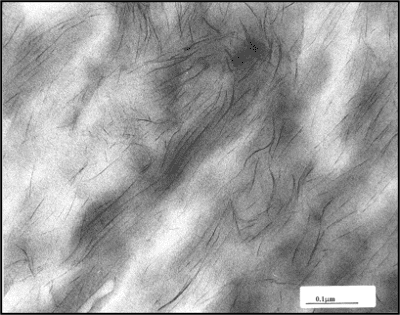
TEM Picture Of Poorly-Dispersed Nanoclay in Nylon 6
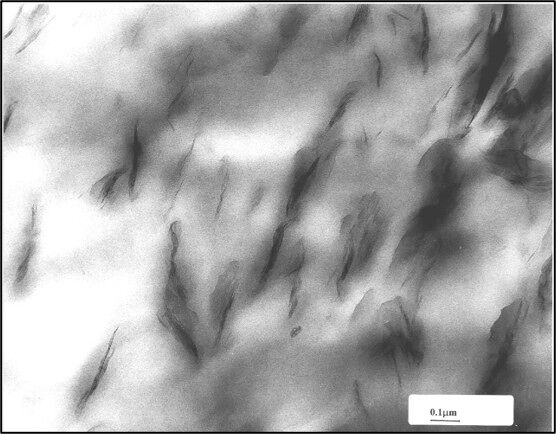 TEM Picture Of Well-Dispersed Nanoclay in Nylon 6
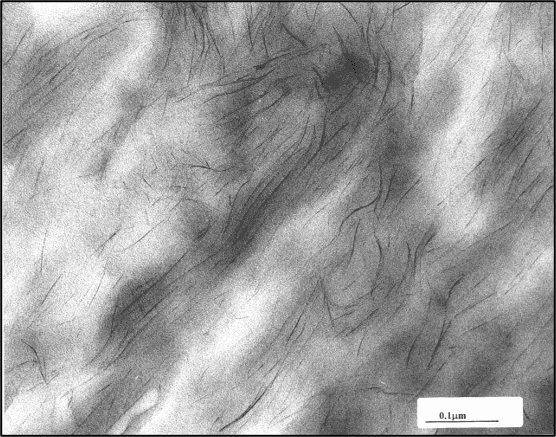
TEM Picture Of Well-Dispersed Nanoclay in Nylon 6
Nano-composite materials have long been recognized for
their potential to deliver outstanding mechanical and
physical performance in thermoplastic resin applications.
However, over the past two decades, their commercialization
has largely stagnated. Most nanocomposite products on the
market today offer only marginal improvements in mechanical
properties. One of the primary challenges in commercializing
nanocomposites is the difficulty of achieving effective
dispersion within plastic resins. Common nanofillers such as
carbon nanotubes (CNT's), graphene, and nanoclays tend to form
agglomerates or tightly bonded layered structures, making it
difficult to achieve the desired fully exfoliated morphology.
For instance, typical commercially available 4% multi-wall carbon nanotube (MWCNT) composites exhibit low ductility (i.e, low elongation at break). In contrast, FPP has demonstrated that a fully exfoliated CNT composite can achieve significantly higher mechanical strength along with excellent ductility. This shows that well-dispersed nanocomposites can simultaneously enhance strength, stiffness, and ductility. FPP has extensive experience in dispersing nanocomposites into various thermoplastic resins to achieve full exfoliation of individual nanolayers. We accomplish this through advanced processing techniques, chemical modification, and the use of dispersion aids. Our novel technical capabilities enable the development of high-performance, lightweight nanocomposite materials for demanding applications.
For instance, typical commercially available 4% multi-wall carbon nanotube (MWCNT) composites exhibit low ductility (i.e, low elongation at break). In contrast, FPP has demonstrated that a fully exfoliated CNT composite can achieve significantly higher mechanical strength along with excellent ductility. This shows that well-dispersed nanocomposites can simultaneously enhance strength, stiffness, and ductility. FPP has extensive experience in dispersing nanocomposites into various thermoplastic resins to achieve full exfoliation of individual nanolayers. We accomplish this through advanced processing techniques, chemical modification, and the use of dispersion aids. Our novel technical capabilities enable the development of high-performance, lightweight nanocomposite materials for demanding applications.
Would you like more information About Our Compounded Resins For Your
needs?
Contact Us
For questions and inquiries please email info@frontierpolymer.com